
Know where sensitive data exists: See which systems, databases, tables, columns, files, and fields contain sensitive data.
Sensitive Data Discovery & Classification
Discover and inventory supported data sources. Scan and classify the sensitive data inside them, then track where findings exist and how they change.
Request a Demo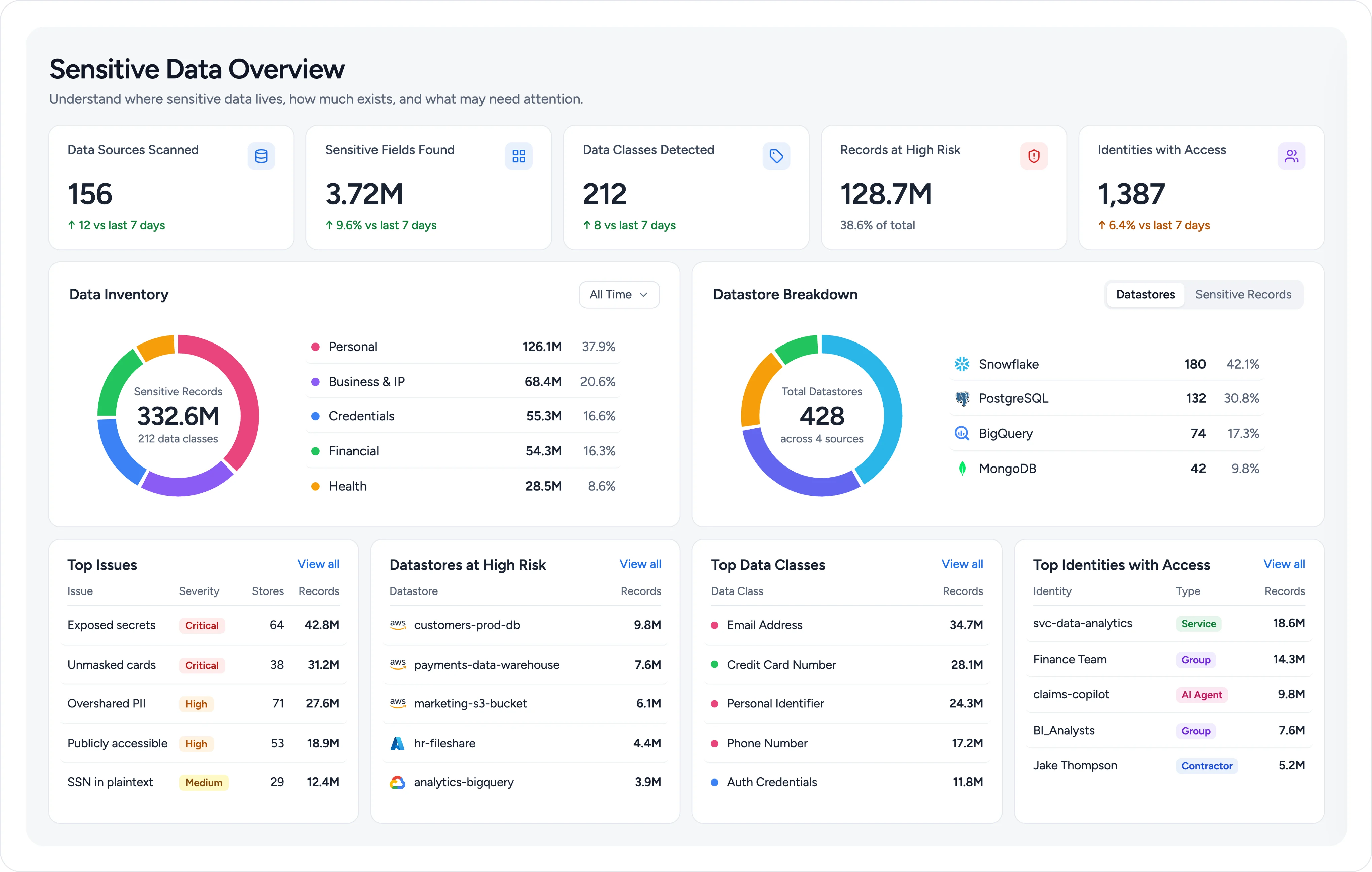
Sensitive data discovery for DSPM
Data security posture management (DSPM) starts with knowing where sensitive data lives and how it is protected. Ubiq Sensitive Data Discovery inventories supported sources, classifies sensitive findings, and tracks changes. Adopt it independently, then connect access analysis and actual protection when your project requires them.
Key Benefits
Understand its exposure: Use sensitivity and protection context to understand where data may be at risk. Pair with Access Intelligence to add effective-access context.
Prioritize what matters: Prioritize sensitive findings by sensitivity and protection status. Add Access Intelligence to evaluate which identities can reach them.
Discovery and classification
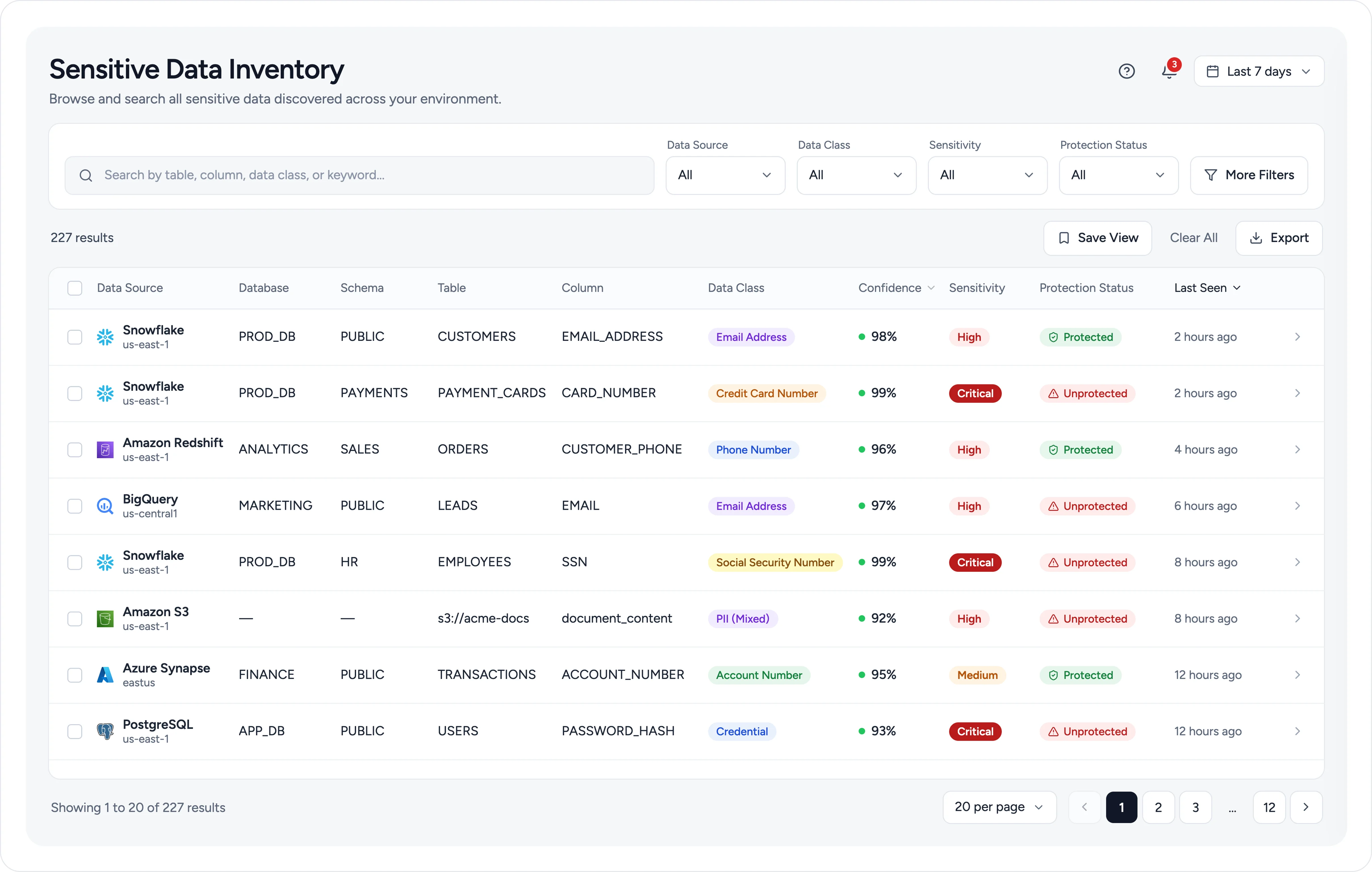
Inventory supported data sources: Build a unified view of the connected repositories and systems that make up the data estate.
Detect and classify sensitive data: Identify PII, PHI, PCI data, credentials, secrets, and customer-defined data types.
Record the exact location: See the source, database, schema, table, column, file, or field for each finding.
Search and review findings: Filter the inventory by data class, confidence, sensitivity, location, and protection status.
Evaluate discovery against your data estate
Start with the sources and sensitive data types your project needs. Review the findings and their context, not just a total count of sensitive records.
Review your source requirements with Ubiq. Explore integration options. For a regulated-data project, see PII, PCI and PHI data discovery.
Separate inventory from scan coverage
Confirm which sources can be inventoried and which structured or unstructured content can be scanned in your deployment.
Review representative findings
Test the data classes that matter to your project. Inspect each finding's source, location, classification, confidence, and sensitivity.
Track changes between scans
Run scans on demand or on a schedule. Review new, changed, and resolved findings as your data estate changes.
Organize the security review
Filter findings by data class, sensitivity, confidence, location, and protection status to decide what your team should review first.
Connect discovery to access and protection
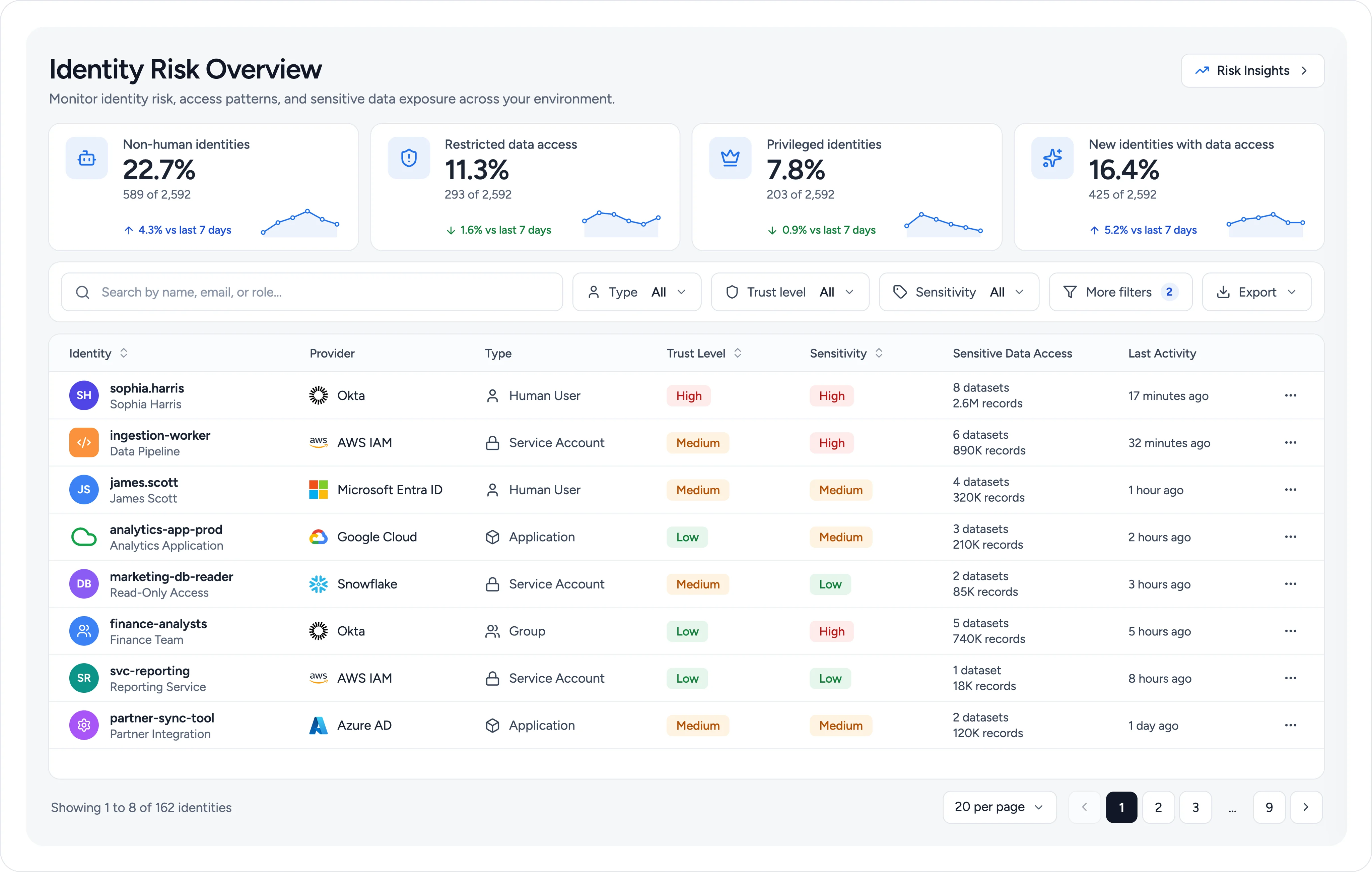
See who can access it: Pair with Access Intelligence to connect sensitive-data findings to the users, service accounts, applications, and other identities that can access them.
Understand why access exists: Use Access Intelligence to trace access through groups, roles, policies, permissions, and other authorization relationships.
Protect sensitive data: Use sensitive-data findings with Runtime Data Protection to apply masking, tokenization, or encryption where protection is needed.
Answers
Sensitive data discovery questions
Direct answers about source inventory, sensitive-data classification, finding location, scan coverage, and tracking changes over time.
What is sensitive data discovery?
Sensitive data discovery is the process of scanning enterprise repositories to locate and classify regulated, confidential, or otherwise sensitive information.
How does Sensitive Data Discovery support DSPM?
Ubiq Sensitive Data Discovery supports data security posture management (DSPM) by finding and classifying sensitive data across supported enterprise sources, recording finding locations and protection context, and tracking changes over time. Pair it with Access Intelligence to evaluate effective access, and with Runtime Data Protection to apply masking, tokenization, or encryption.
Can Sensitive Data Discovery be used independently?
Yes. Sensitive Data Discovery can be adopted independently to inventory supported sources, find and classify sensitive data, and track findings. Access Intelligence adds effective-access analysis. Runtime Data Protection adds identity-based masking, tokenization, and encryption. Those products are not required for standalone discovery.
What sensitive data can Ubiq identify?
Ubiq can identify PII, PHI, PCI data, credentials, secrets, and customer-defined data types, with location, confidence, sensitivity, and protection context for each finding.
Does Ubiq inventory data sources as well as sensitive findings?
Yes. Ubiq provides an inventory of supported connected sources and repositories, then records where each sensitive finding appears within the source, database, schema, table, column, file, or field.
Can Ubiq track discovery findings over time?
Yes. Teams can run scans on demand or on a schedule and track new, changed, and resolved findings as the data estate changes.
Where can Ubiq discover sensitive data?
Ubiq scans supported databases, data warehouses, cloud file storage, logs, and other enterprise repositories on demand or on a schedule.
How do source inventory and data classification differ?
Source inventory records the systems and repositories in the connected data estate. Sensitive data discovery and classification scans supported content to locate sensitive information and identify its data class. Buyers should verify both source inventory and scan coverage for their deployment.
What should a sensitive data discovery evaluation verify?
Use representative sources and sensitive data types to review scan coverage, finding locations, classifications, confidence, sensitivity, and protection context. Run more than one scan to inspect how new, changed, and resolved findings are represented. Confirm the source and content coverage needed for your project with Ubiq.
Can discovery findings include access context?
Yes. When paired with Access Intelligence, Ubiq can connect sensitive-data findings to human and non-human identities, groups, permissions, and effective access paths.
Explore the Ubiq platform
Platform
Platform Overview
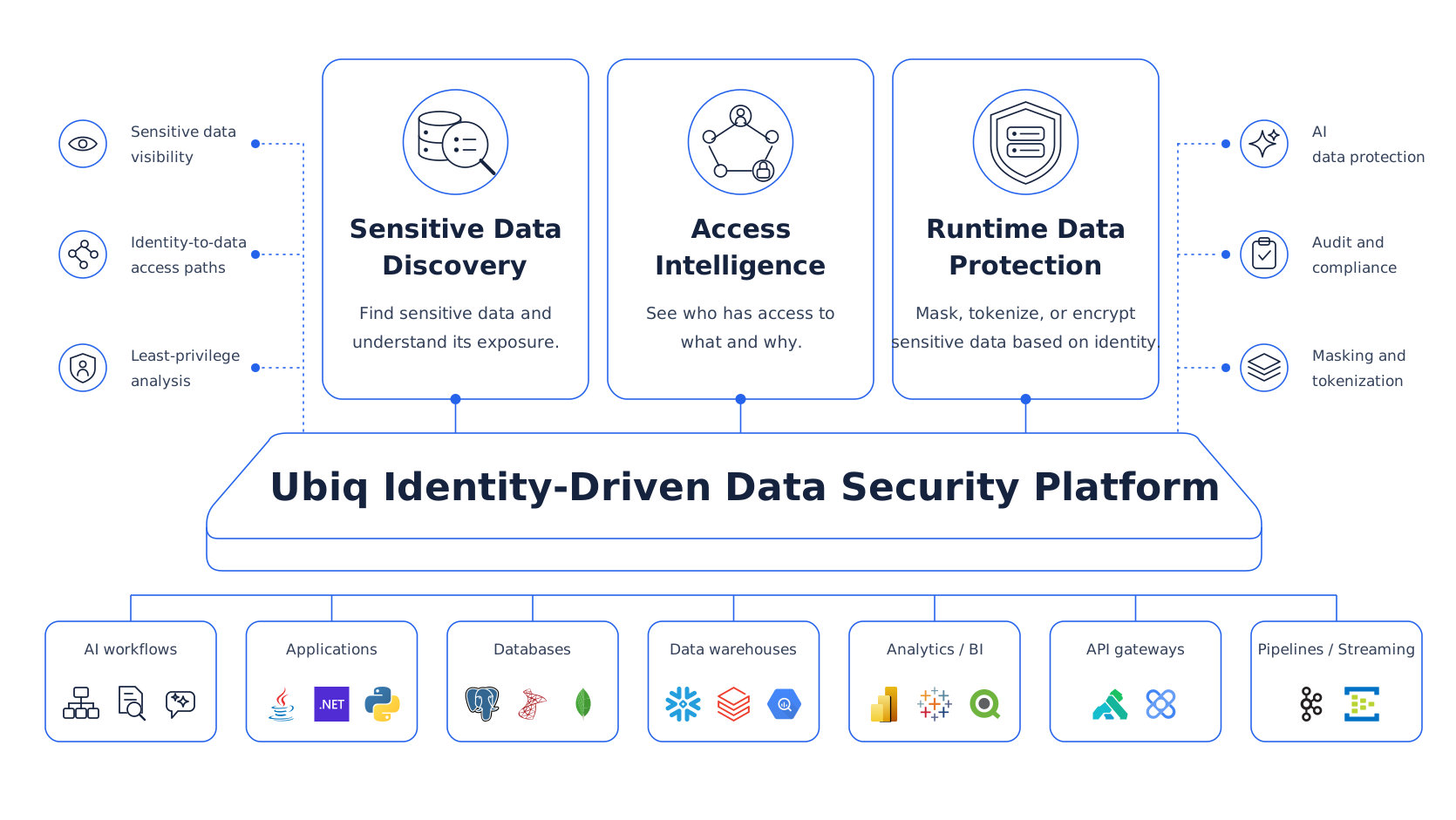
See how Sensitive Data Discovery & Classification, Access Intelligence, and Runtime Data Protection work together in one identity-driven platform.
Learn more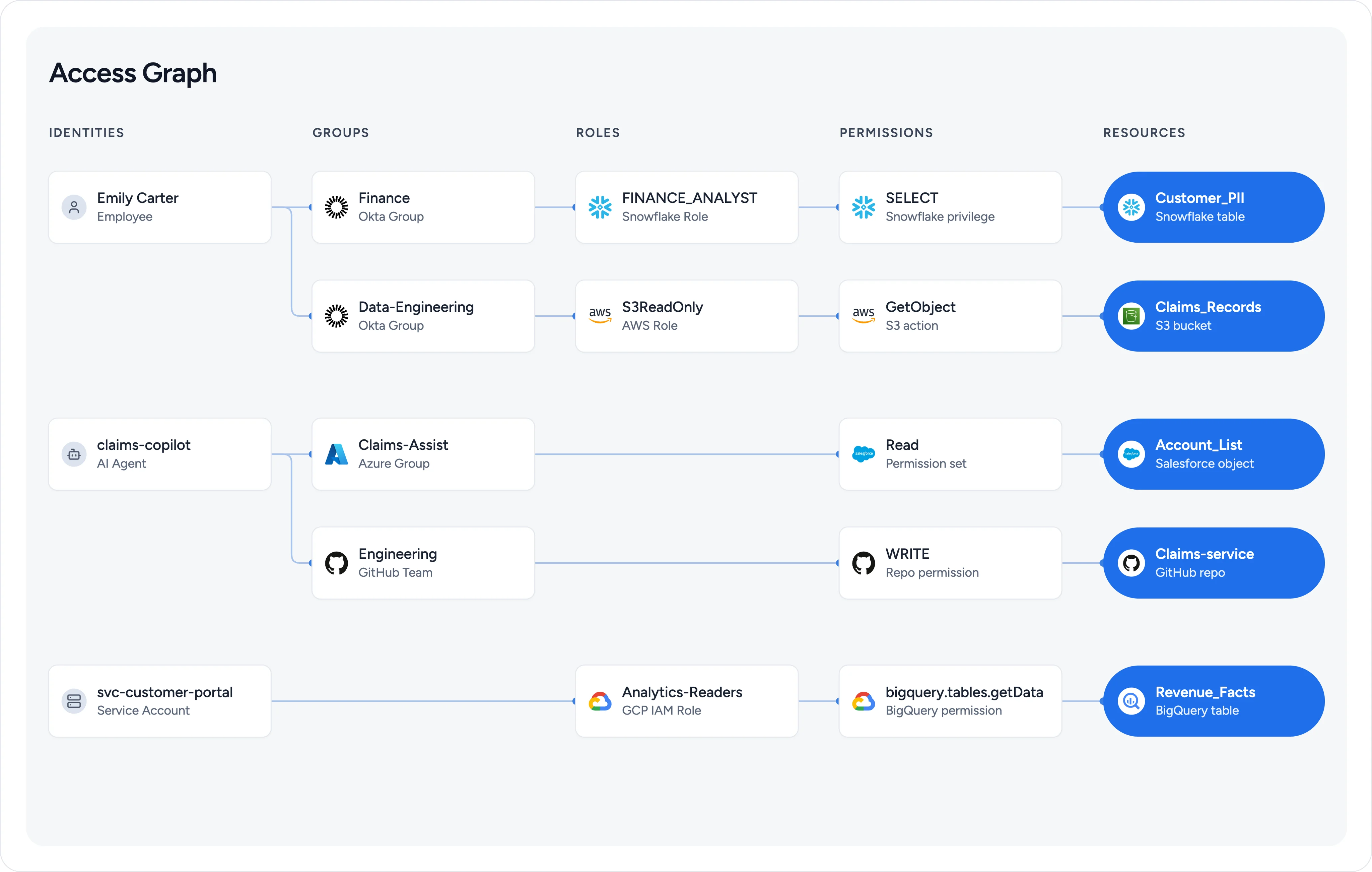
Product
Access Intelligence
Resolve effective permissions across connected systems and investigate identity-to-resource and resource-to-identity access.
Learn more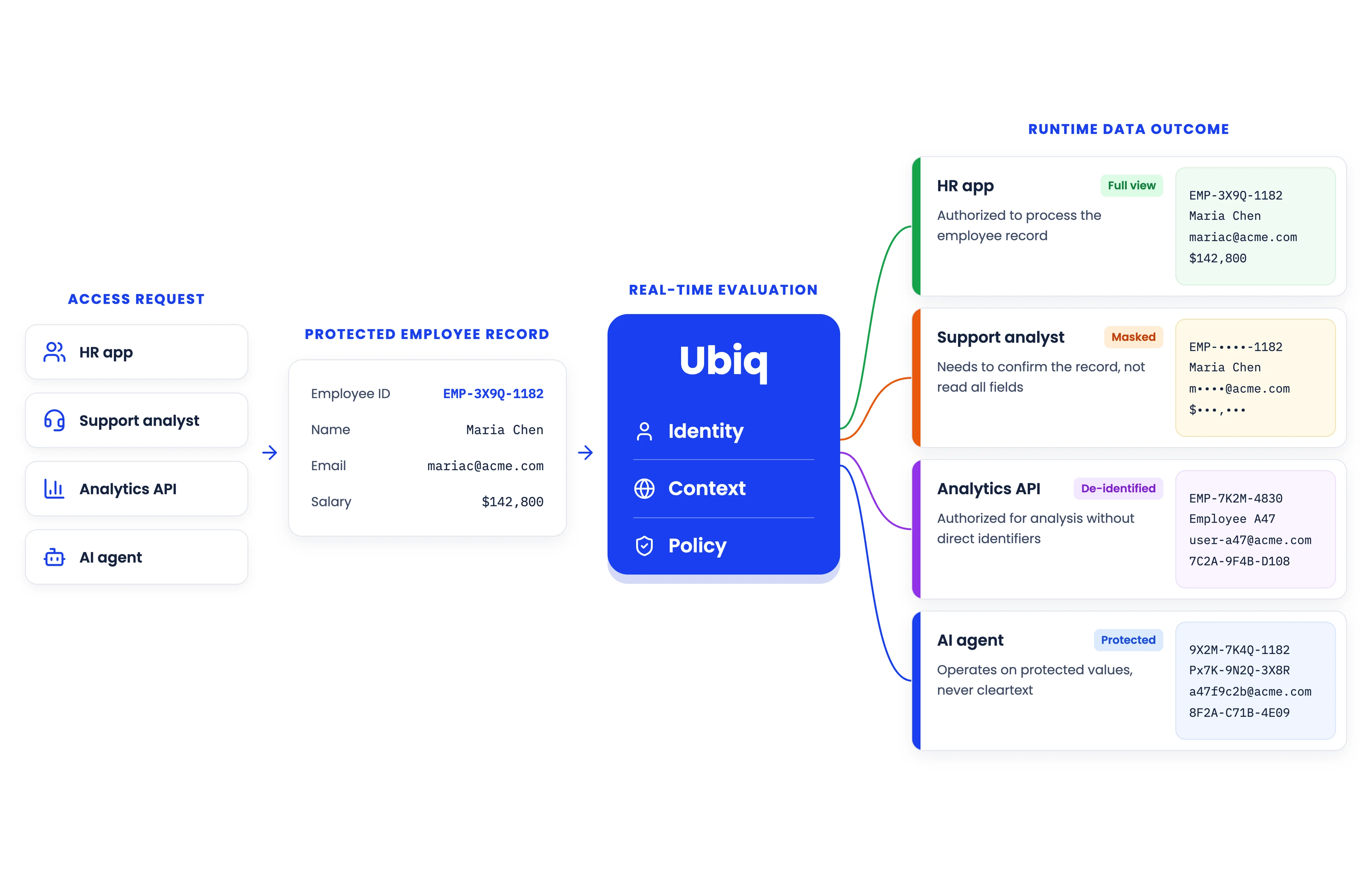
Product
Runtime Data Protection
Control what sensitive data is exposed to each identity using encryption, tokenization, FPE, or masking.
Learn moreFind sensitive data and understand its exposure.
Discover and classify sensitive data, understand where it may be exposed, and prioritize the findings that matter most.
Request a Demo