Scope the sources
Inventory the supported sources in your project. Establish which databases, repositories and content can be scanned.

Locate and classify regulated data across your data estate. Build a finding-level inventory your security team can review, prioritize and use to plan protection.
A count of sensitive records is a starting point. Ubiq gives you the location and classification context needed to investigate each finding.
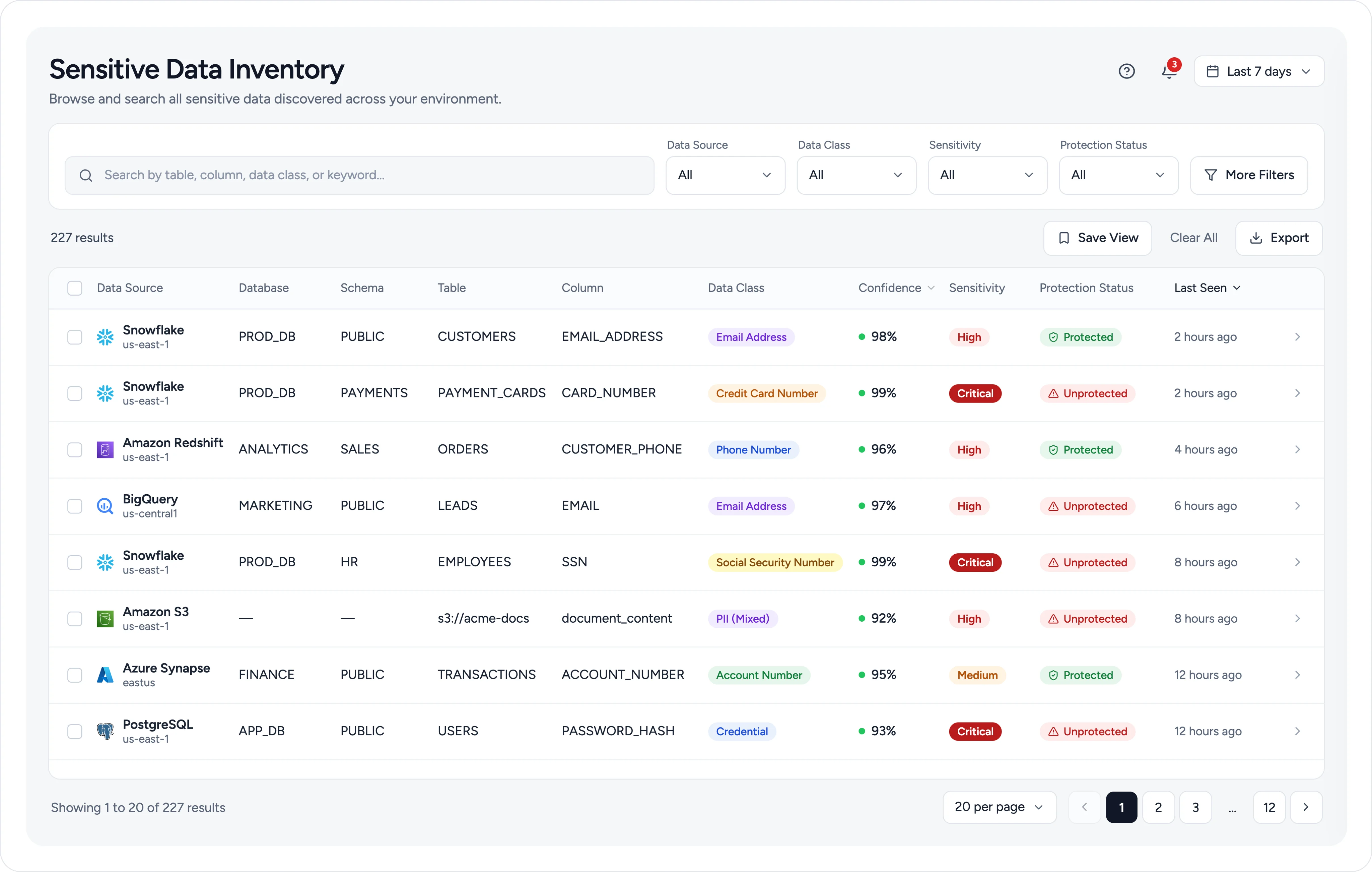
Finding-level inventory
Know what was found: Classify personal, payment and health data instead of treating every sensitive finding as the same risk.
Locate it precisely: Trace each finding to its source, database, schema, table, column, file or field.
Review the evidence: Filter by data class, confidence, sensitivity and protection status to focus the security review.
Enterprises trust Ubiq to secure sensitive data


A regulated-data project starts with a defined set of sources and the data classes you need to find. Keep that scope visible as you scan, review findings and track changes.
Standalone discovery
Ubiq Sensitive Data Discovery & Classification gives your team the inventory and finding context to start a protection project. Adopt discovery independently, then extend it when you need access analysis or enforcement.
Inventory the supported sources in your project. Establish which databases, repositories and content can be scanned.
Locate PII, PHI and PCI data inside those sources. Keep findings tied to their data class and exact location.
Use confidence, sensitivity and protection context to decide which findings your team should investigate first.
Run scheduled or on-demand scans. Review new, changed and resolved findings as the data estate evolves.
Bring the data classes and representative sources your security or compliance team needs to investigate. Evaluate the findings against that project scope.
Establish where personal data appears and how findings are classified. Review customer-defined data types alongside the PII classes your project needs.
Locate PCI data findings and review their source and protection status. Use the inventory to inform the next step in your cardholder-data protection project.
Locate PHI findings and their source context. Give security and compliance teams a concrete inventory to review before planning protection.
Evaluate representative data from your environment. Review scan coverage and classification confidence with Ubiq before expanding the project.
Extend discovery with Access Intelligence to investigate who can reach the data, and Runtime Data Protection to control what each identity can see.
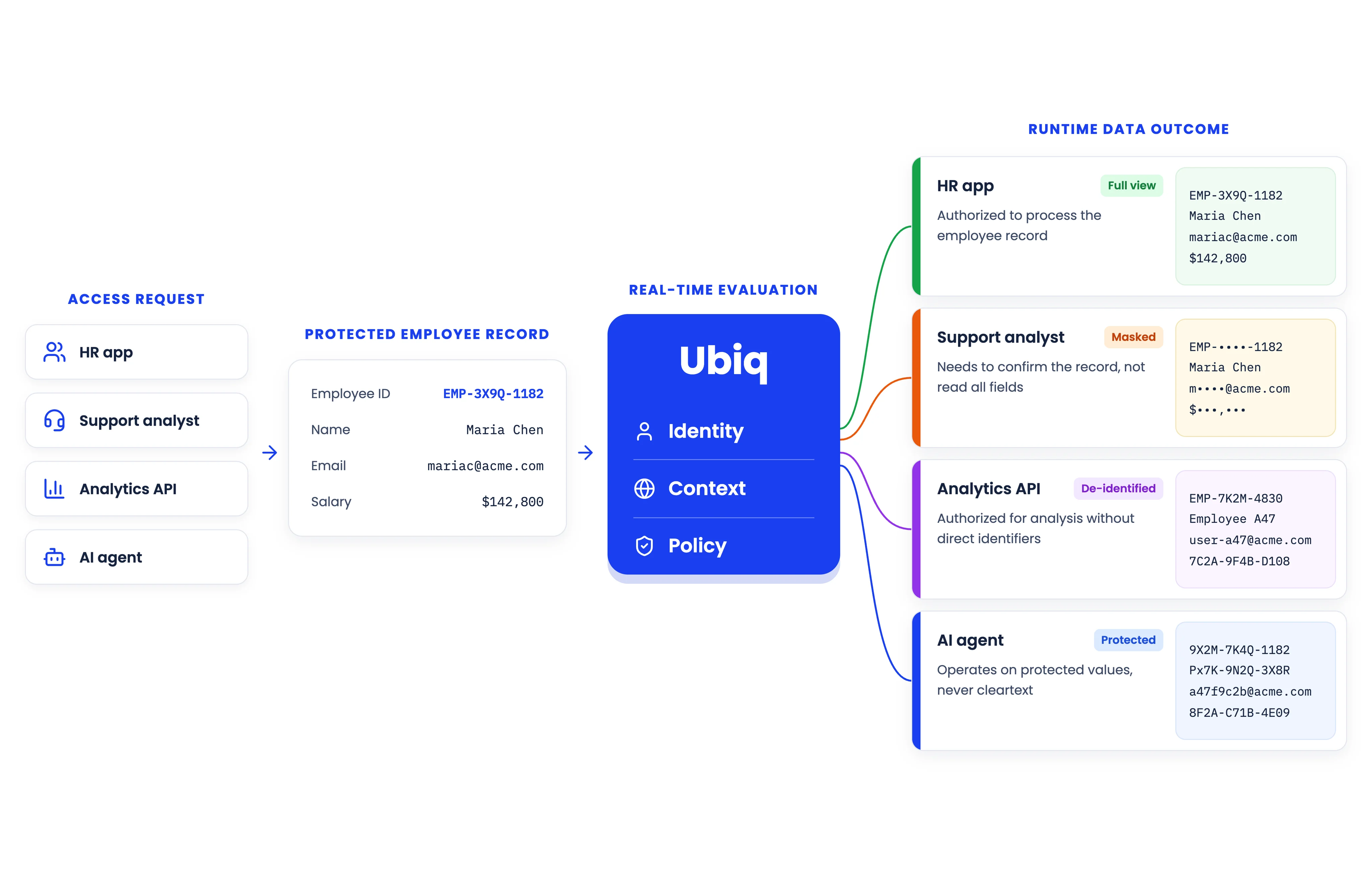
Optional platform extensions
Investigate effective access: Add Access Intelligence to resolve which human and non-human identities can access sensitive resources and trace the granting paths.
Protect sensitive values: Add Runtime Data Protection to apply masking, tokenization or encryption and govern the returned data by identity and policy.
PII data discovery locates personally identifiable information in data sources and classifies the findings. Ubiq Sensitive Data Discovery & Classification records each finding's location, data class, confidence, sensitivity and protection context so teams can review a finding-level inventory.
Ubiq classifies PII, PHI and PCI data across supported sources. Start the project with the repositories and data classes you need to evaluate, then review representative findings and classification confidence. Source inventory and scan coverage are distinct parts of that evaluation.
Discovery gives your security and compliance teams evidence about where regulated data exists. Compliance and PCI DSS scope depend on your environment, controls and assessment. A discovery finding does not itself certify compliance or automatically reduce PCI DSS scope.
Yes. Sensitive Data Discovery & Classification can be adopted independently. Add Access Intelligence when you need effective-access analysis, and Runtime Data Protection when you need masking, tokenization or encryption governed by identity and policy. The products connect within Ubiq's Data Security Platform.